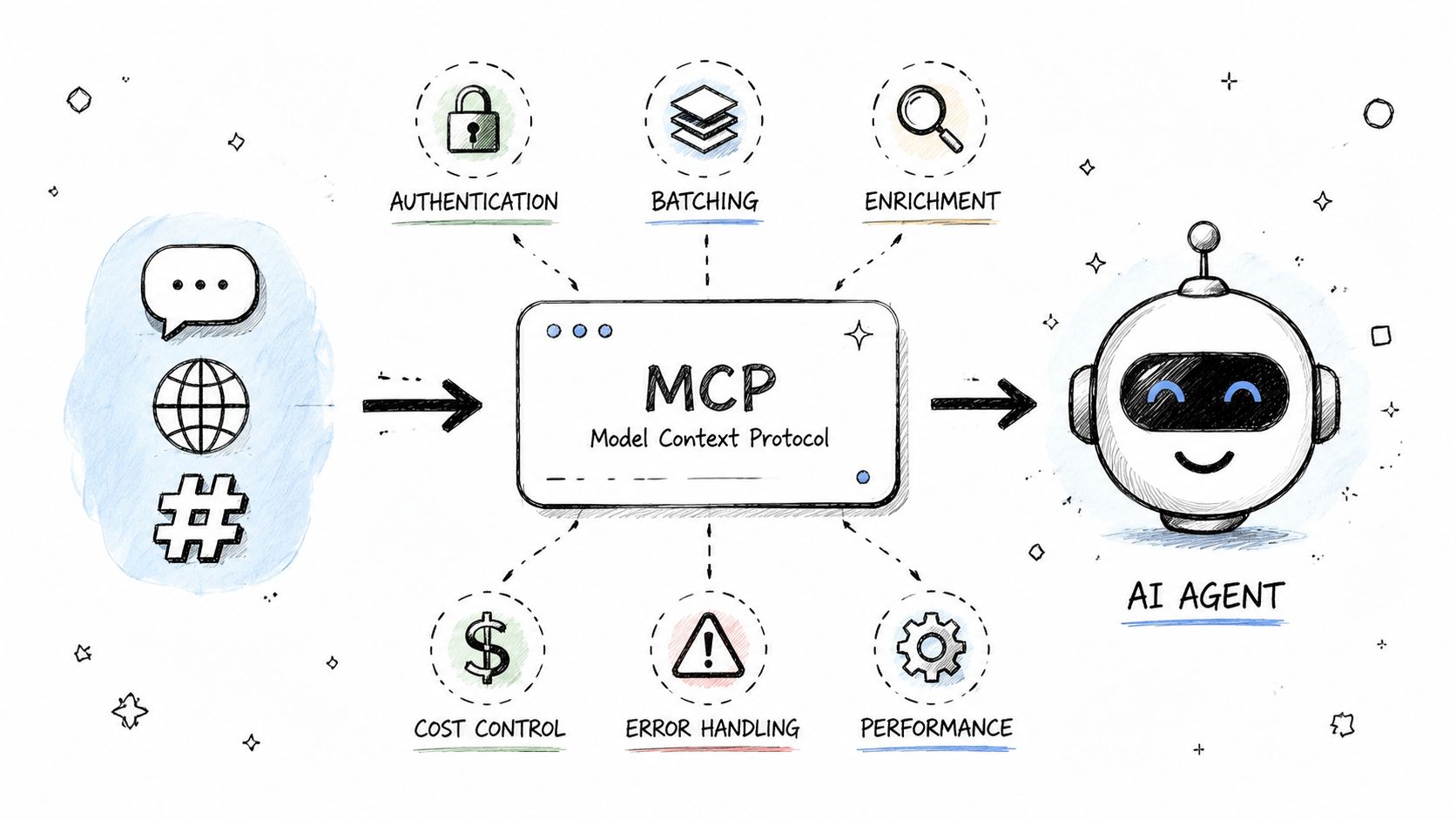
An agent gets a simple request. Find recent social posts on a topic, check the web pages behind them, judge the tone, and return a short answer. Without a shared interface, that one request turns into a tangle. Each platform has its own SDK, login method, paging rules, data format, and billing model. The agent may find the post but miss the thread. Or it may sum up a claim without checking the article behind it.
Social data MCP gives engineers a cleaner way to hand those skills to AI apps. Anthropic released the Model Context Protocol on November 25, 2024. It is an open standard for secure, two-way links between data sources and AI tools (Anthropic’s MCP announcement). By December 9, 2025, there were more than 10,000 active public MCP servers. ChatGPT, Cursor, Gemini, Microsoft Copilot, and VS Code had all adopted it, according to Anthropic.
This guide follows a simple build order. API Direct is the main path. We cover API keys, picking endpoints, the HTTP MCP setup, paging, batches, cost limits, errors, and speed. The other nine tools are narrower options or add-ons. They cover licensed media data, scraping, web search, web context, and single-platform servers. If you want to compare the wider field, this list of top MCP servers to consider adds useful context.
1. API Direct
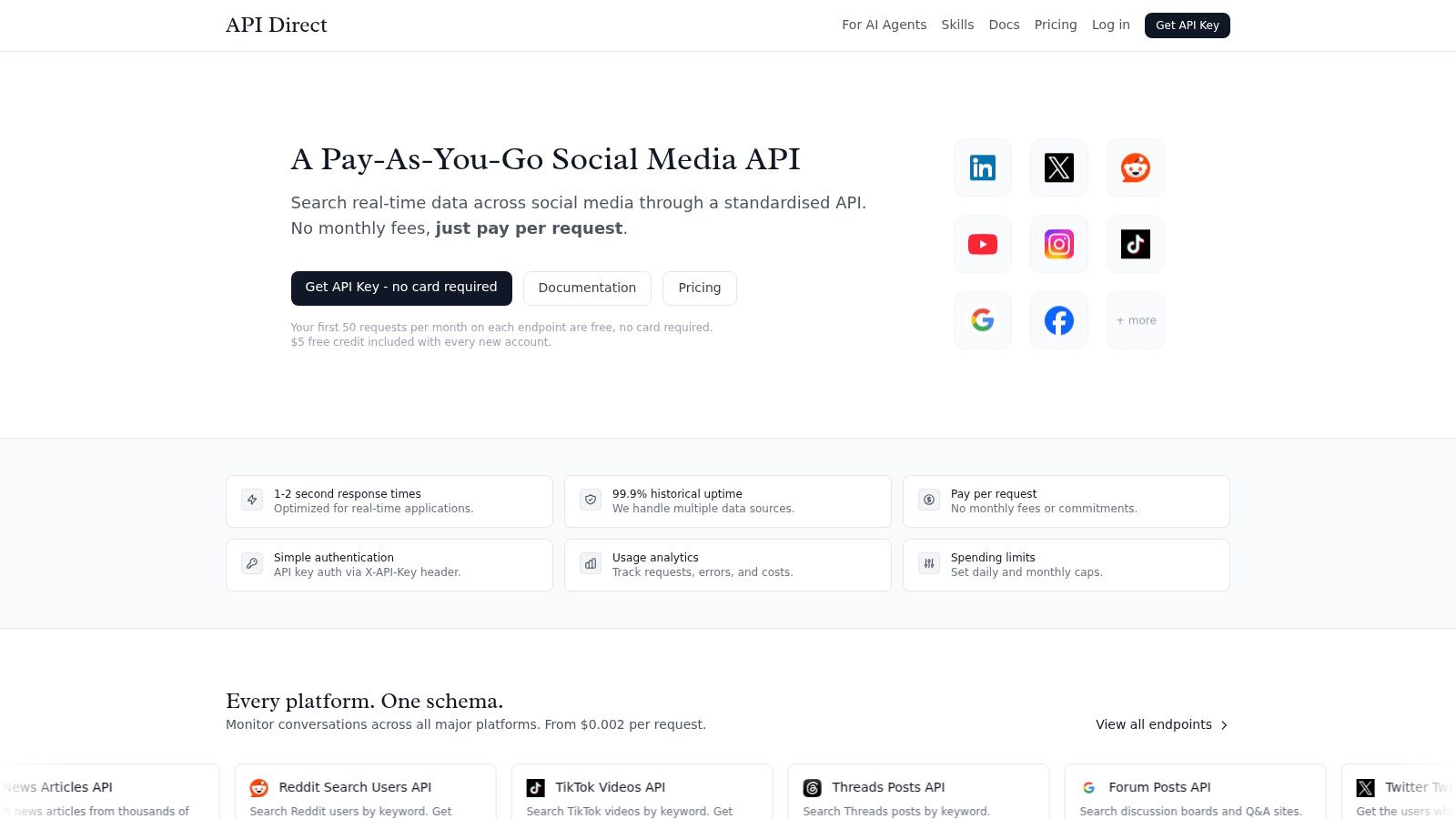
Say an agent must check a brand mention across many networks. It soon runs into a mix of SDKs, keys, paging rules, and data formats. API Direct is a good first choice when the job needs real-time social and web data from many platforms through one MCP link. It covers X (Twitter), Facebook, Instagram, Threads, TikTok, YouTube, and Reddit. It also covers LinkedIn, Bluesky, Truth Social, web search, forums, news, and Google Places.
The big win for engineers is a shared output shape. Posts come back with the same core fields: title, URL, date, author, source, domain, and snippet. Your code doesn’t need its own parser for each platform. Coverage still varies by endpoint, though. A few endpoints, such as news and forum search, skip the date and author fields. So check that the call you need exists before you design the agent around it.
You sign requests with an API key in the X-API-Key header. Pick the narrowest endpoint that answers the question. Then expose it through API Direct’s HTTP MCP server. Each endpoint shows up as an MCP tool. That covers social search, profiles, posts, comments, forums, news, and Places. Setup guides cover Claude Code, Claude Desktop, ChatGPT, Cursor, and OpenClaw. In Claude Code, setup takes one command.
What should the first agent call do?
Start with a read-only task, such as finding posts about a brand over a set time. Look at the raw data before you add summaries or emotion scores. Test paging early. Many social endpoints return results one page at a time. Those are billed per page, not per request.
Batch requests let you look up lots of known URLs or IDs in one call. A batch holds up to 100 requests and costs nothing extra. Each item bills at its normal endpoint rate. Put limits around batches anyway. Cap the result count. Stop once the agent has enough proof. And block repeat searches for the same query.
Practical rule: Let the agent search broadly, but make your app fetch narrowly. Search first, check the IDs that come back, then pull only the details the final answer needs.
API Direct can also score emotions. Add get_sentiment=true to an endpoint that returns posts, comments, videos, or reviews. Each result then gets emotion scores and a positive, negative, or neutral label. It costs $0.001 extra per request or page. Use it after you fetch the data, and only when the answer needs it. A separate Google AI Mode endpoint sends a prompt to Google’s AI Mode. It returns the answer along with its sources.
Usage stats and spending limits keep testing in check. Once a daily or monthly limit is hit, calls are blocked until the next period starts. There is no monthly fee or minimum. You pay only for answered requests, so most failed calls are free. Most endpoints include 50 free requests each month. You don’t need a card to start, according to the API Direct website.
The trade-off shows up at high volume. One schema and fast replies, mostly 1 to 2 seconds per call, cut down build work. But per-request and per-page prices make paging and concurrency design key. Each user can run 10 requests at once per endpoint. Support can raise that limit if you need more. Treat those limits and billing rules as part of your design, not as cleanup work.
2. Meltwater MCP
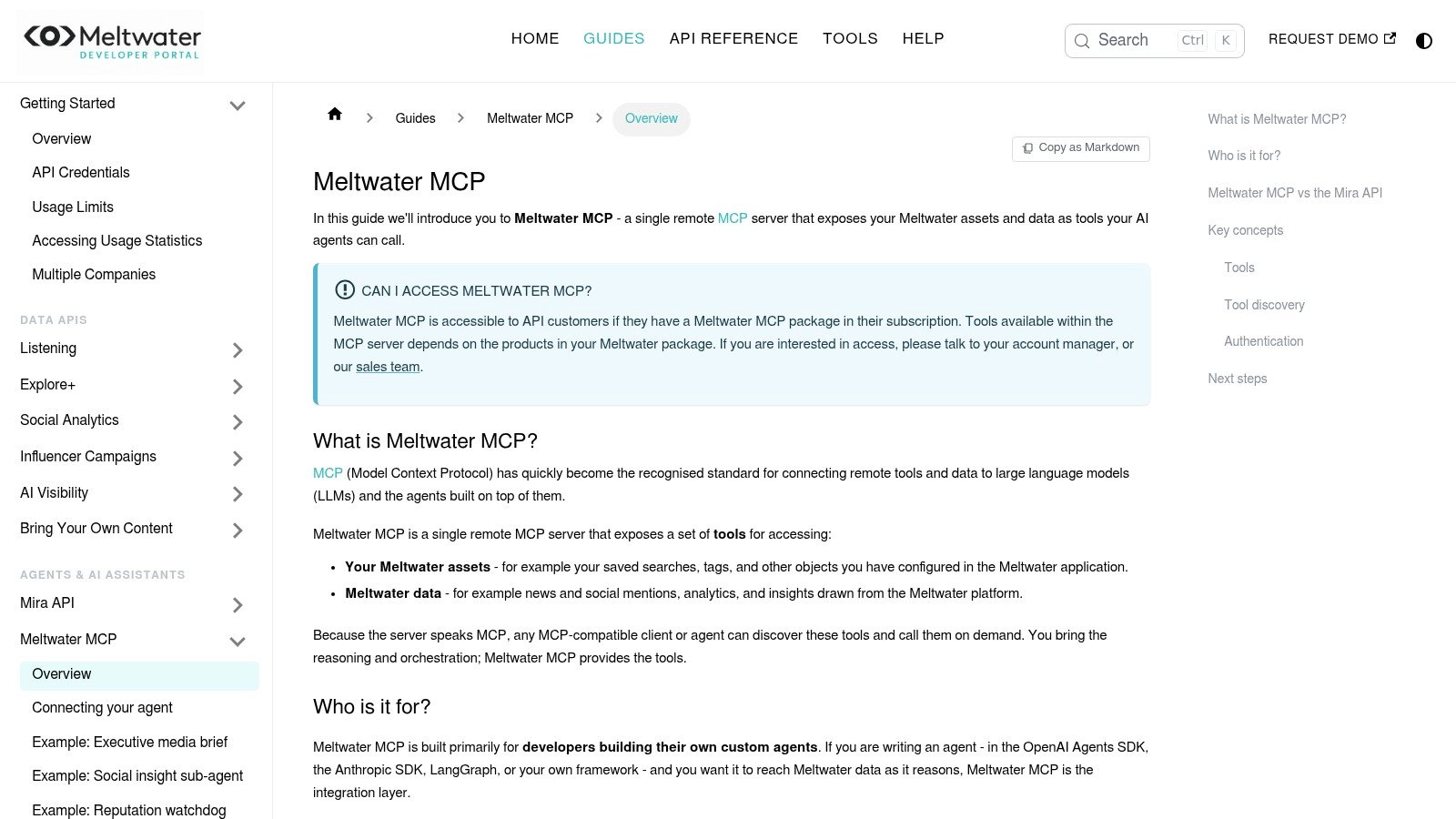
Meltwater MCP fits a different buying case. Say your firm already pays for Meltwater’s media tools. Its own remote MCP server lets agents reach your saved searches, tags, news and social mentions, stats, and insights. You don’t have to build a custom bridge between the agent and Meltwater’s APIs.
The value is licensed data and vendor-managed context. An agent works with your Meltwater assets and the data drawn from Meltwater’s platform. The dev portal shows how to connect a custom agent. Its sample agents include an executive media brief and a reputation watchdog. Meltwater also offers connectors for Claude and ChatGPT. For now, the server signs in with a Meltwater API token, and OAuth 2.0 is planned. That makes it a better fit for a PR or comms team than for a developer who needs a light social search endpoint.
Where it belongs in the build sequence
Use Meltwater once you’ve mapped out the workflow. You should also be sure your licensed data must stay the source of truth. A useful flow might run a saved search, pull mentions, ask for stats, and write a short brief. The MCP layer removes glue code. But you still need to decide which searches, accounts, markets, and reports an agent may access.
The main limit is scope. Meltwater MCP exposes Meltwater’s own products and data. It doesn’t cover the whole open web or each platform. It also needs a Meltwater MCP package in your plan, and the tools you get depend on that package. So it works next to API Direct rather than as a full swap.
Choose Meltwater when governance, media data, and a current vendor deal matter more than raw endpoint choice. Choose API Direct when you want pay-as-you-go access to social, web, forums, news, and Places with one schema. The two solve different problems.
3. Apify MCP Server
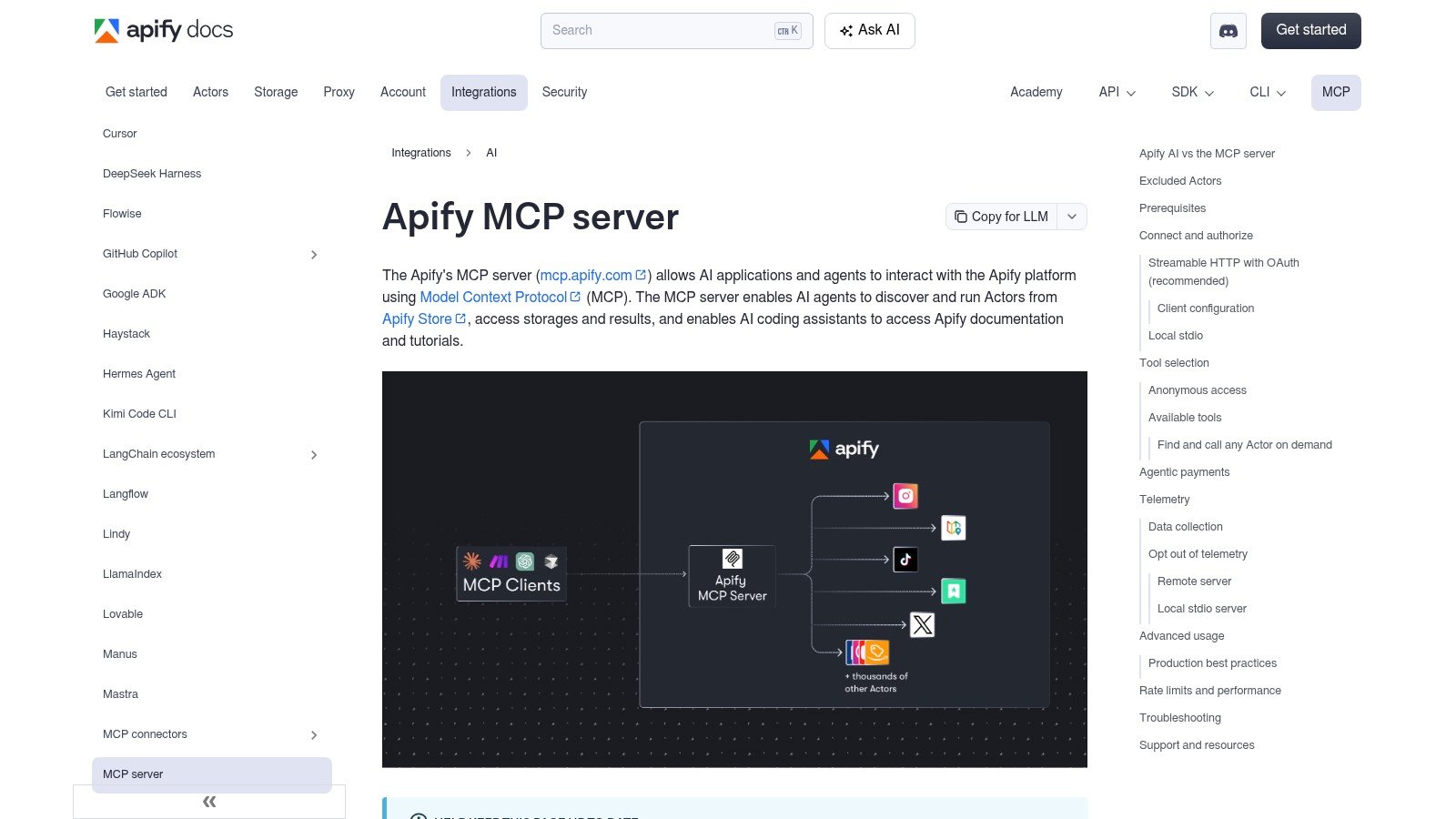
Apify MCP Server is a strong choice when the data lives on a site with no clean API for your needs. Agents can find and run Apify Actors for social media, search, maps, online stores, and general web scraping. The platform’s MCP setup docs show how to connect. The hosted server signs you in with OAuth, or you can use an API token. The Apify Store has a large range of Actors, built by Apify and by its community.
The big plus is reuse. You don’t have to write and maintain a scraper for each target. Instead, you pick an Actor that already handles that kind of page. Then you expose its inputs and outputs to the agent. Apify also offers job schedules, storage, webhooks, and proxies. Those matter once a one-off test becomes a repeat collection job.
Scraping breadth has a maintenance cost
Actors exist for X, Reddit, YouTube, Instagram, LinkedIn, and many other sites. But they can’t create a stable contract where the site doesn’t offer one. Layout changes, login walls, bot defenses, partial pages, and new terms can all break results. Before an Actor goes into a live agent, save sample outputs and test against them.
API Direct’s guide to web scraping social media helps frame the choice. Scraping tools are useful when you need a page-level view. They also help with a source that no clean endpoint covers. But they aren’t always better than a structured API for repeat monitoring.
Apify costs can also stack up. An Actor may carry its own fee, while proxies, storage, and repeat runs add more. Put a hard cap on how many pages an agent can request. Keep long-running jobs outside the chat loop. Use MCP for controlled calls into Actors. Don’t treat it as a license for the agent to launch endless crawls.
4. Bright Data Web MCP
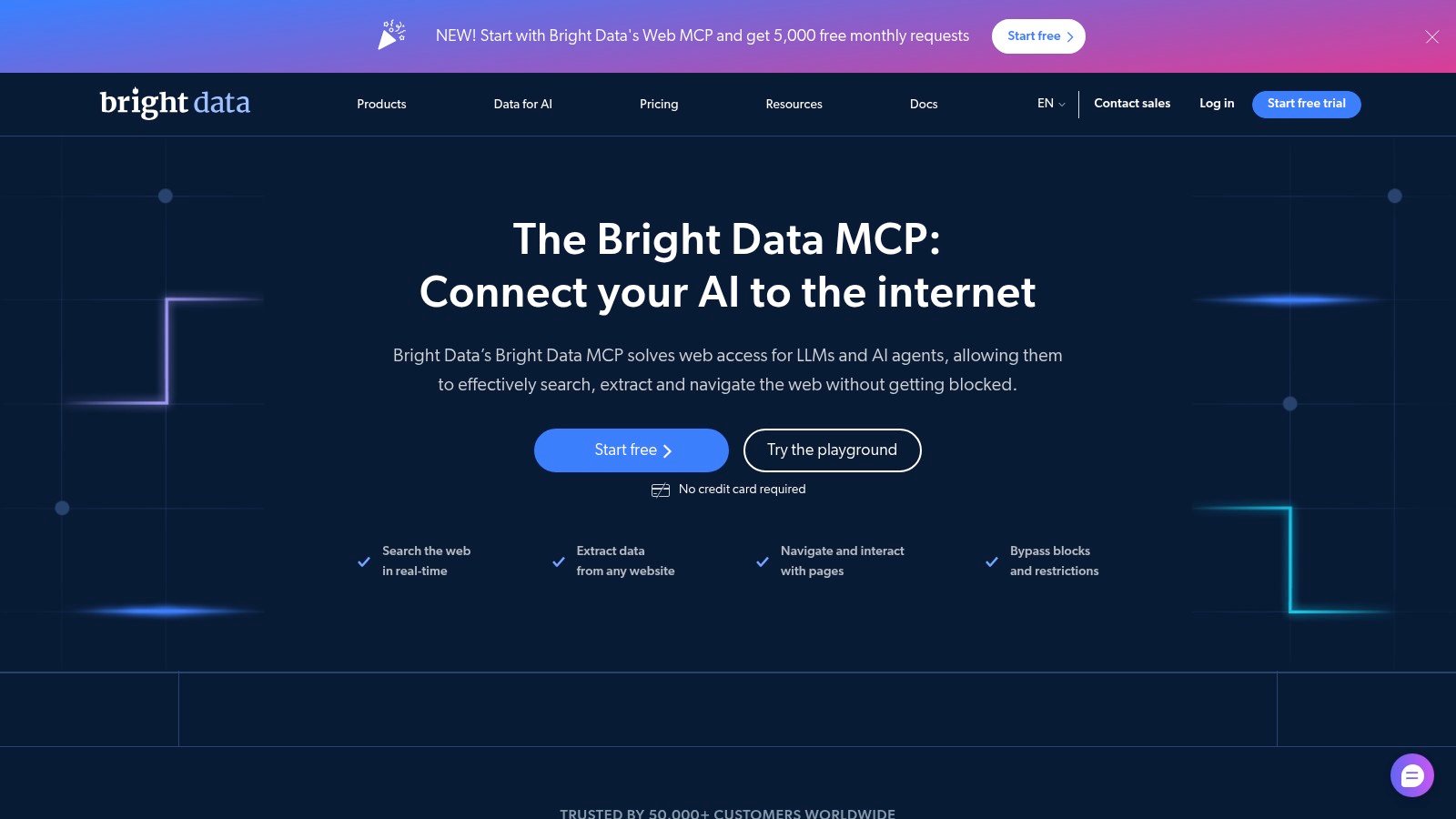
Bright Data Web MCP is built for hard web scraping. Think of sites that lean on JavaScript or throw up geo blocks and CAPTCHAs. It pairs MCP access with proxies, remote browsers, and unblocking tools. For social data work, that matters when the data sits in a dynamic page rather than a simple public API.
You can use the hosted server with one URL or run it on your own machine. The free tier gives 5,000 requests a month, and you don’t need a card. Live use still needs a careful cost and legal review. The tool can help an agent reach pages that plain HTTP requests can’t render. But it doesn’t change the legal or contract status of collecting that content.
Use it for access problems, not normal API calls
Bright Data makes sense when rendering and access are the bottleneck. A remote browser can load pages that build themselves in the browser. Proxies help with geo testing and with sites that block direct requests. Those tools are overkill for a stable endpoint. If it already returns posts, authors, dates, and likes, you don’t need them.
The trade-off is more moving parts. Proxy and unblocking costs can grow fast as agents repeat searches or open many pages. Browser-based scraping is also slower and fails more often than a focused API call. So an agent should use it as a fallback or for specific pages.
Build source rules into the MCP tool description. Require a domain, limit how deep the agent can click, cap the content it returns, and log the final URL. Review each source’s terms before you collect from it. Bright Data is a powerful base layer. Still, engineers own source choice, data rules, and the checks that decide if a page counts as good proof.
5. SerpAPI MCP
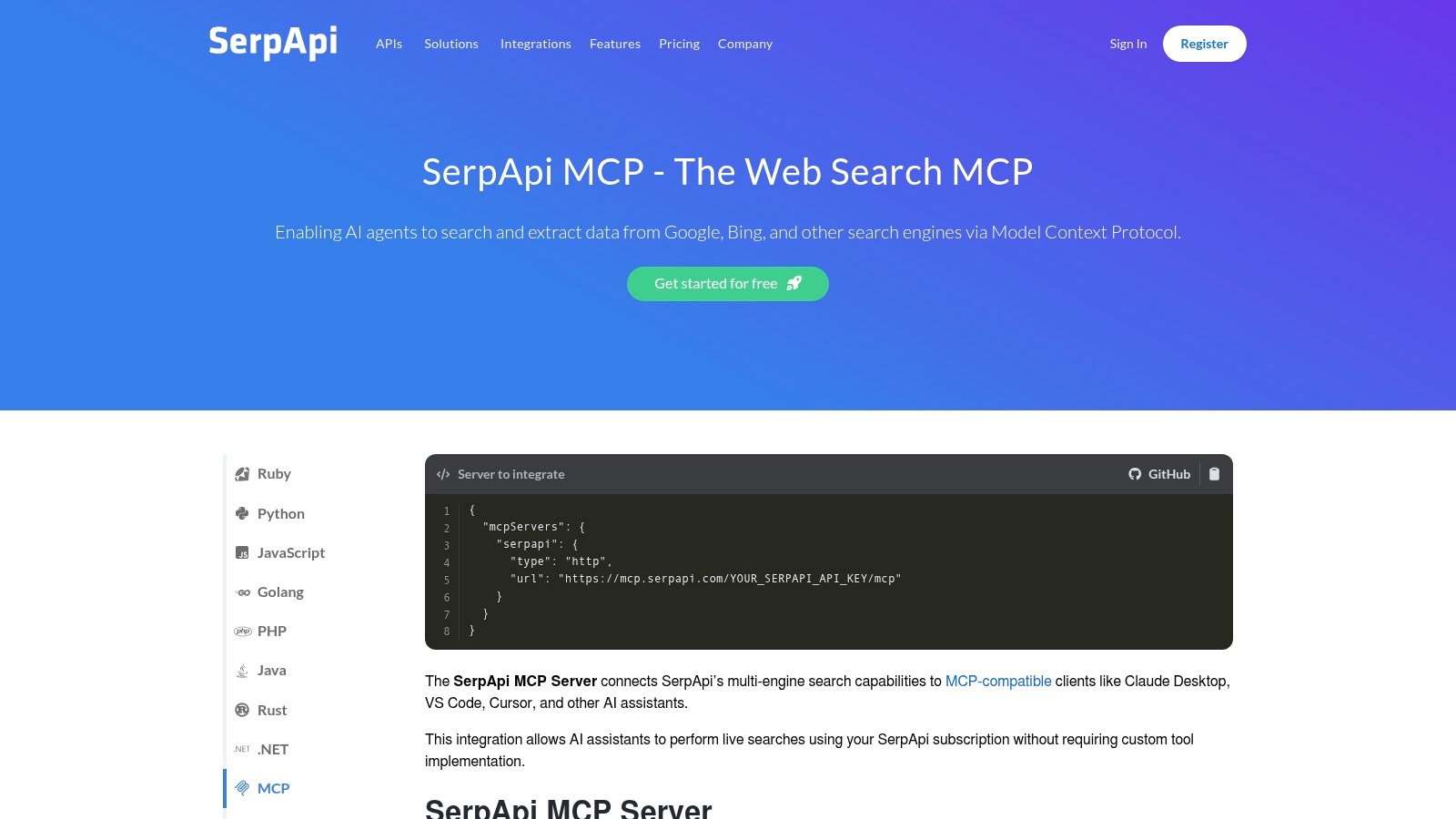
SerpAPI MCP belongs near the start of a search workflow. It returns structured results from Google, Bing, YouTube, and many other search engines. An agent can use it to find fresh social URLs, profiles, videos, news pages, or names. Then it hands those links to a deeper tool.
That split matters. SerpApi is mainly a discovery layer, not a full social network interface. It helps answer “where should I look?” But it isn’t the right tool for full threads, account timelines, comments, or platform-specific fields. SerpApi offers a hosted MCP server and an open-source version on GitHub. So teams can choose managed access or run it themselves.
A clean agent flow uses SerpApi to find candidate URLs and filters them by topic. It then calls API Direct, Tavily, Apify, or a single-platform server to check them. That split stops you from asking one tool to search, extract, enrich, and summarize all at once.
The downside is one more key and one more bill. SerpApi needs its own API key, and the free plan is capped at 250 searches a month. Search results can also be snippets or ranking quirks rather than full source content. So the agent should cite a found URL only after it fetches and checks the page or post behind it.
Use SerpApi when search engines are the fastest way to find social content. Use API Direct when the agent knows the platform and needs a steady data shape. The first finds candidates fast. The second suits a multi-platform pipeline with one schema.
6. Tavily MCP
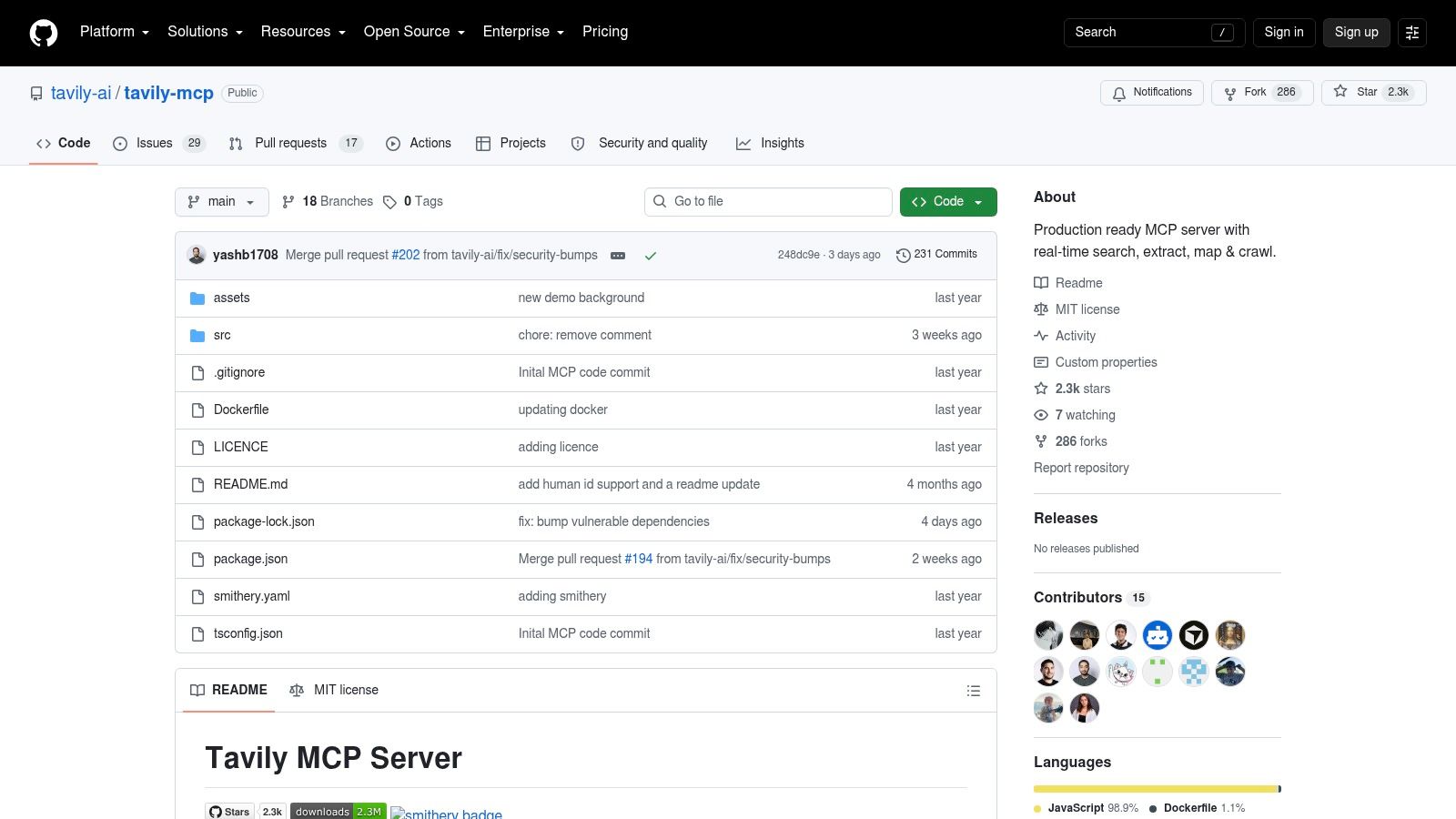
Tavily MCP handles the web-context half of a social research task. Its MCP server has tools to search, extract, map, and crawl the web. The output is shaped for LLMs. That helps when a social post links to an article, or when a forum thread needs backing up. It also helps when an agent must test a claim against current web pages.
The best pattern is step by step, not scattershot. First fetch the social post and find the claim or linked URL. Then ask Tavily to search for context or extract the page. This keeps the agent from crawling broadly when one clean page is enough.
Keep enrichment separate from evidence collection
Tavily’s strength is clean web retrieval. It doesn’t give direct access to each social platform. So don’t make it your only social data source if the answer needs native fields. Comments, user timelines, and like counts are good examples. Pair it with a social endpoint. Then keep the original URLs and fetch times in your app.
The service can cut down tool chaining because search and extraction live in one place. That makes the agent easier to prompt and can lower build effort. The free plan gives 1,000 API credits a month, and you don’t need a card. Requests stop when credits run out. So set usage limits before an agent can crawl a few pages per answer.
A good MCP description tells the model when to use Tavily. “Check the linked article and sum up the key passage” is a safer instruction than “research the topic.” Narrow tools lead to steadier calls, cleaner citations, and less waste.
7. Reddit MCP Server
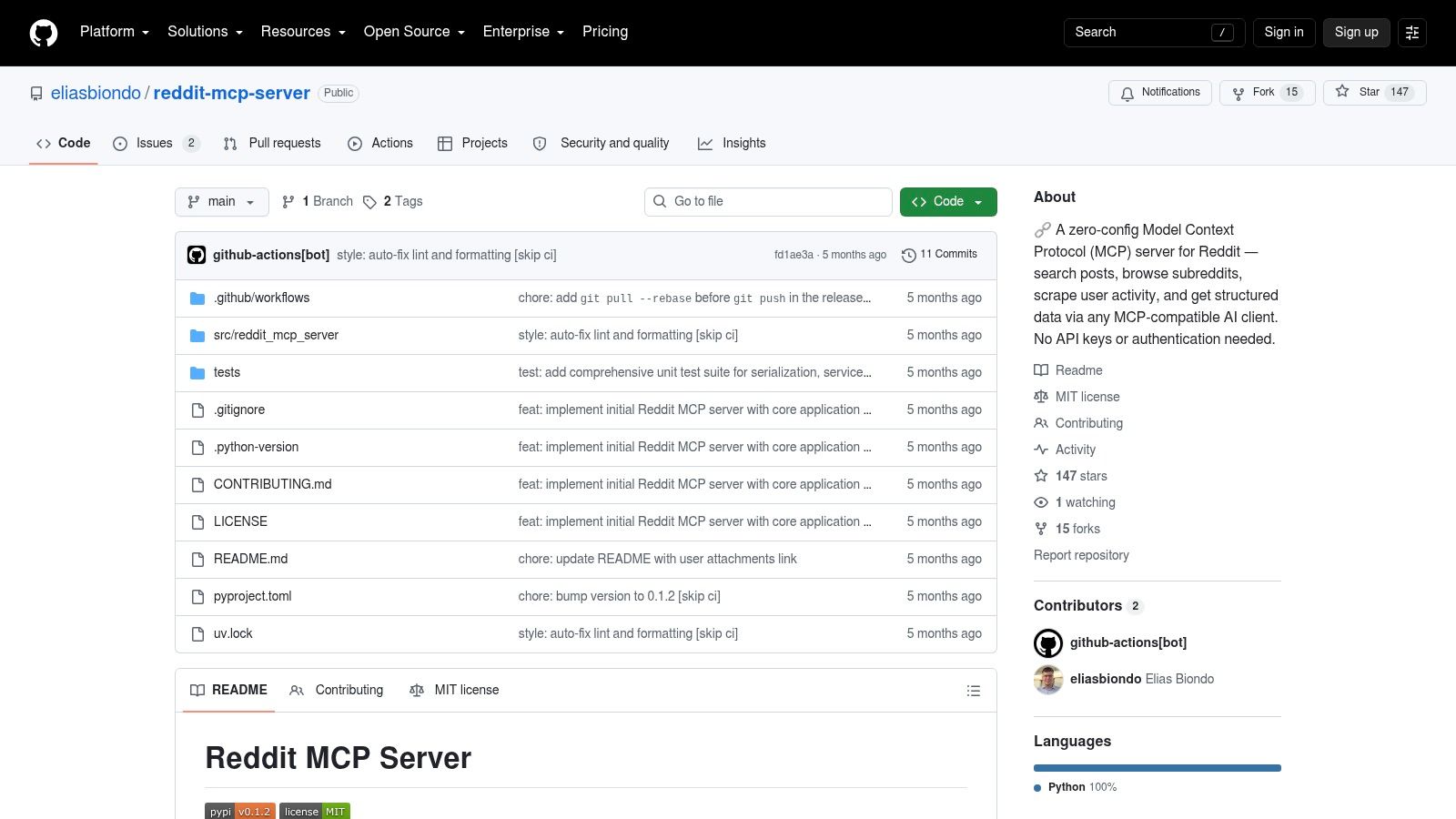
The open-source Reddit MCP Server is a good starting point for Reddit-only workflows. It can search all of Reddit or one subreddit and browse subreddit listings. It can fetch a post with its full comment tree. It can also look up a user’s posts and comments. It needs no API keys and no login, so engineers can try each tool within minutes.
Reddit works well for research into what people think. An agent can search chosen communities, pull comment trees, and group repeat questions or objections. The server only reads public data. So the risk is smaller than with tools that can post or edit content.
Prototype first, harden before scale
No-key access makes testing easy, but it doesn’t promise a stable live service. The server reads public Reddit data, so Reddit’s own limits and bot defenses still apply. It adds a short delay between paged requests and supports a proxy setting. But it has no option for Reddit API keys. Community-run servers can also break when Reddit changes its rules or pages.
Before you put the server behind an agent that runs on its own, set some limits. Use subreddit allowlists, a max thread depth, and a result cap. Cache thread IDs so repeat prompts don’t fetch the same thread twice. For data in one format across platforms, compare the server’s fields with API Direct’s Reddit posts endpoint. Then choose one main schema based on coverage, login model, and running cost.
This server suits research tests, in-house assistants, and Reddit-only workflows. API Direct fits better when Reddit is one input among many. In that case, the app needs one login model, one data shape, and cost controls. Spell out those trade-offs in the MCP tool description and rollout plan.
8. Bluesky MCP
Bluesky MCP servers expose public Bluesky and AT Protocol data. That includes account search, profiles, feeds, post threads, quote posts, and follow lists. They help researchers study Bluesky on its own terms. They don’t push each query through a multi-network layer.
This one is read-only, which is a strength for exploring. An agent can pull an author’s feed, walk a thread, search accounts, and check trending topics. Any standard MCP client works. Most tools work without a Bluesky account. Full-text post search is the exception. Bluesky only allows it for signed-in users, so it needs an app password. The server runs over stdio or Streamable HTTP. There is also a public hosted endpoint.
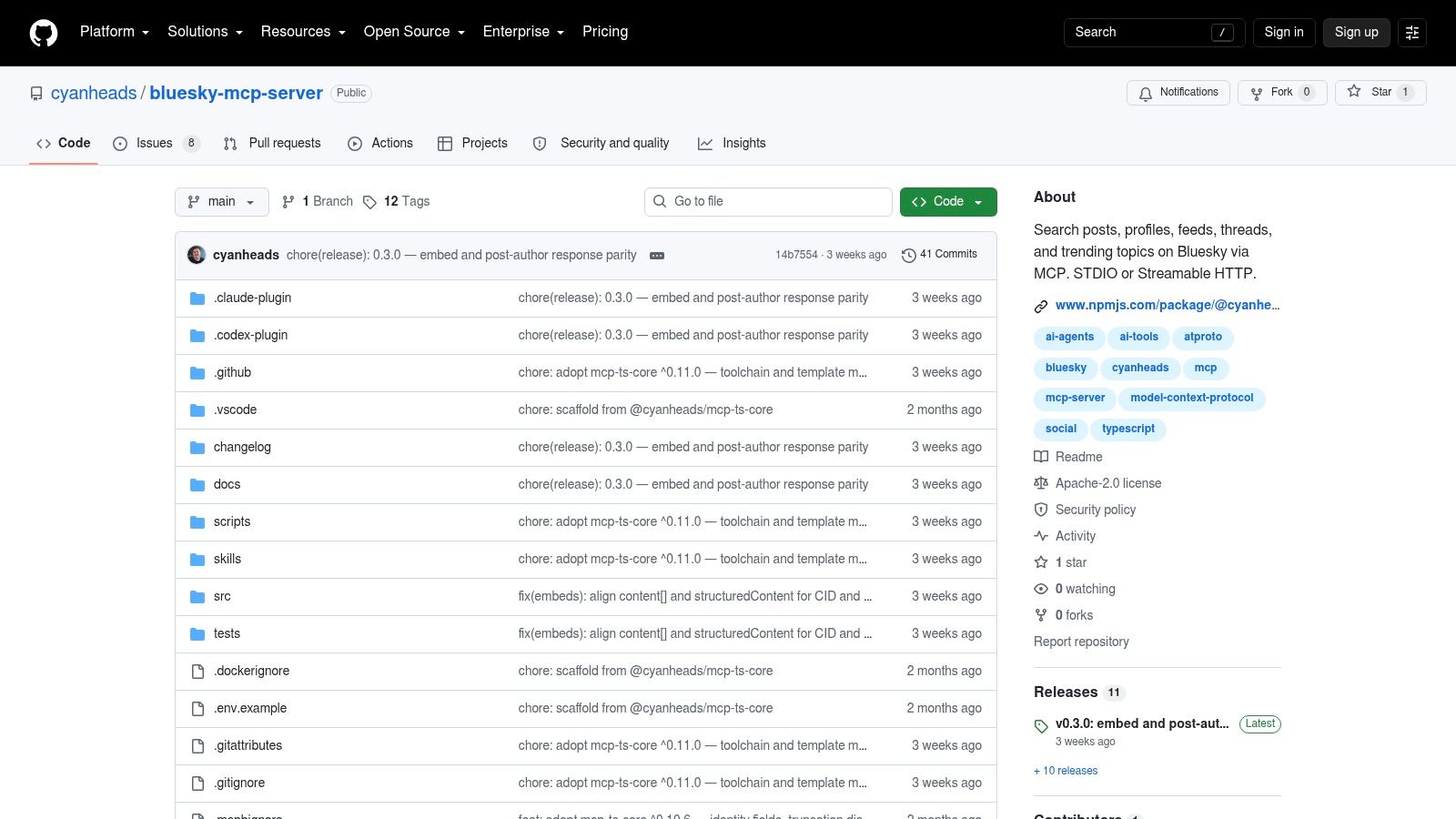
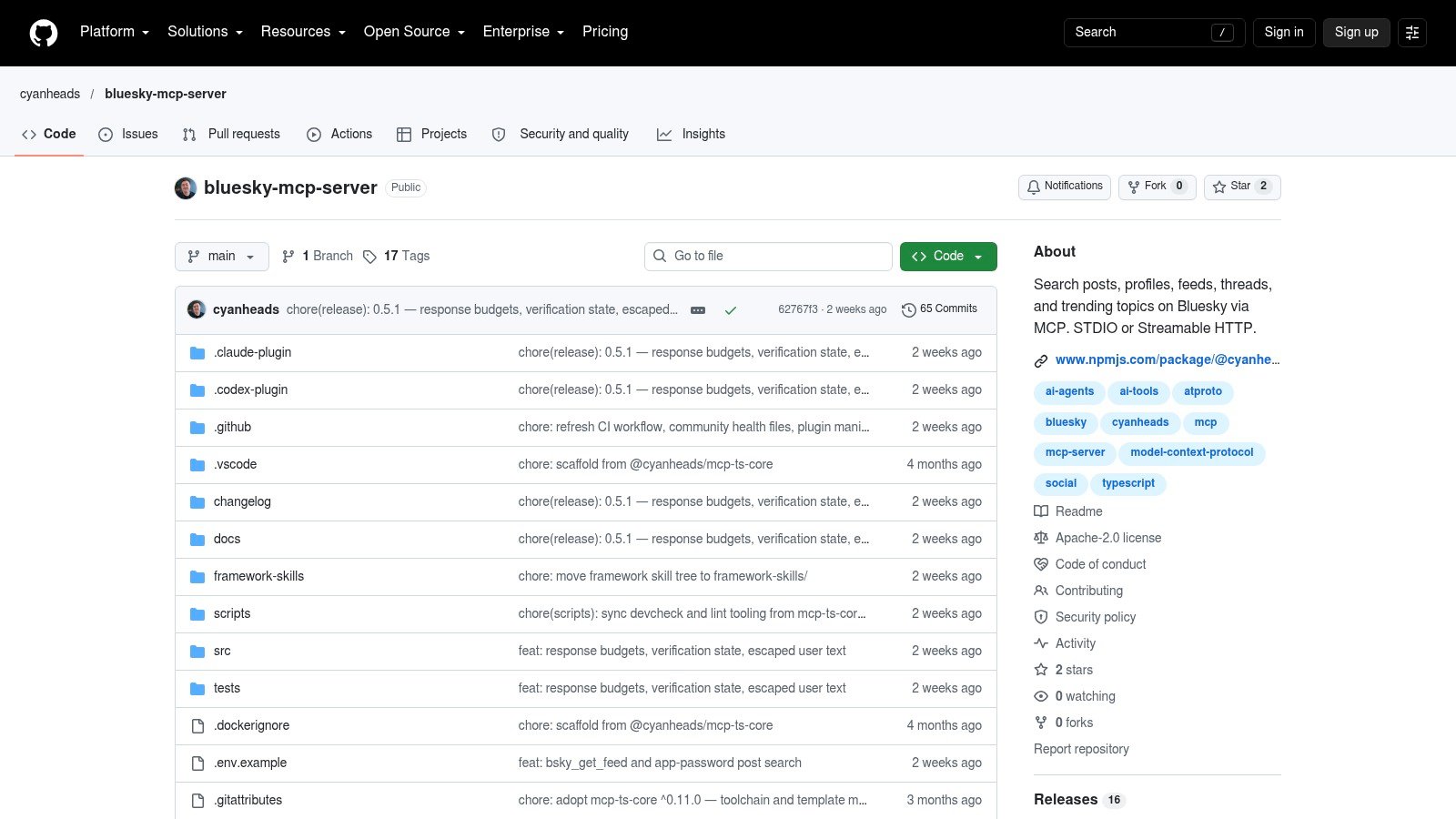
The limit is platform scope. A Bluesky server won’t match up results from X, LinkedIn, Instagram, Reddit, or Facebook. That narrow focus is fine when Bluesky is the subject. It gets awkward when an agent must compare one topic across many networks. API Direct also covers Bluesky search, profiles, and posts. That helps if you’d rather keep Bluesky in the same schema as your other sources.
Pick a well-kept repo with care. Pin versions, check the access it asks for, and test thread paging. Also test posts that were deleted or can’t be found. The AT Protocol has useful social building blocks. But an MCP wrapper still needs watching when the server or Bluesky itself changes.
For a cross-platform agent, keep Bluesky as a niche tool. Convert its output at your app’s edge. Don’t assume a field named author means the same thing on each network. Store the platform identity and source-specific details next to the common fields.
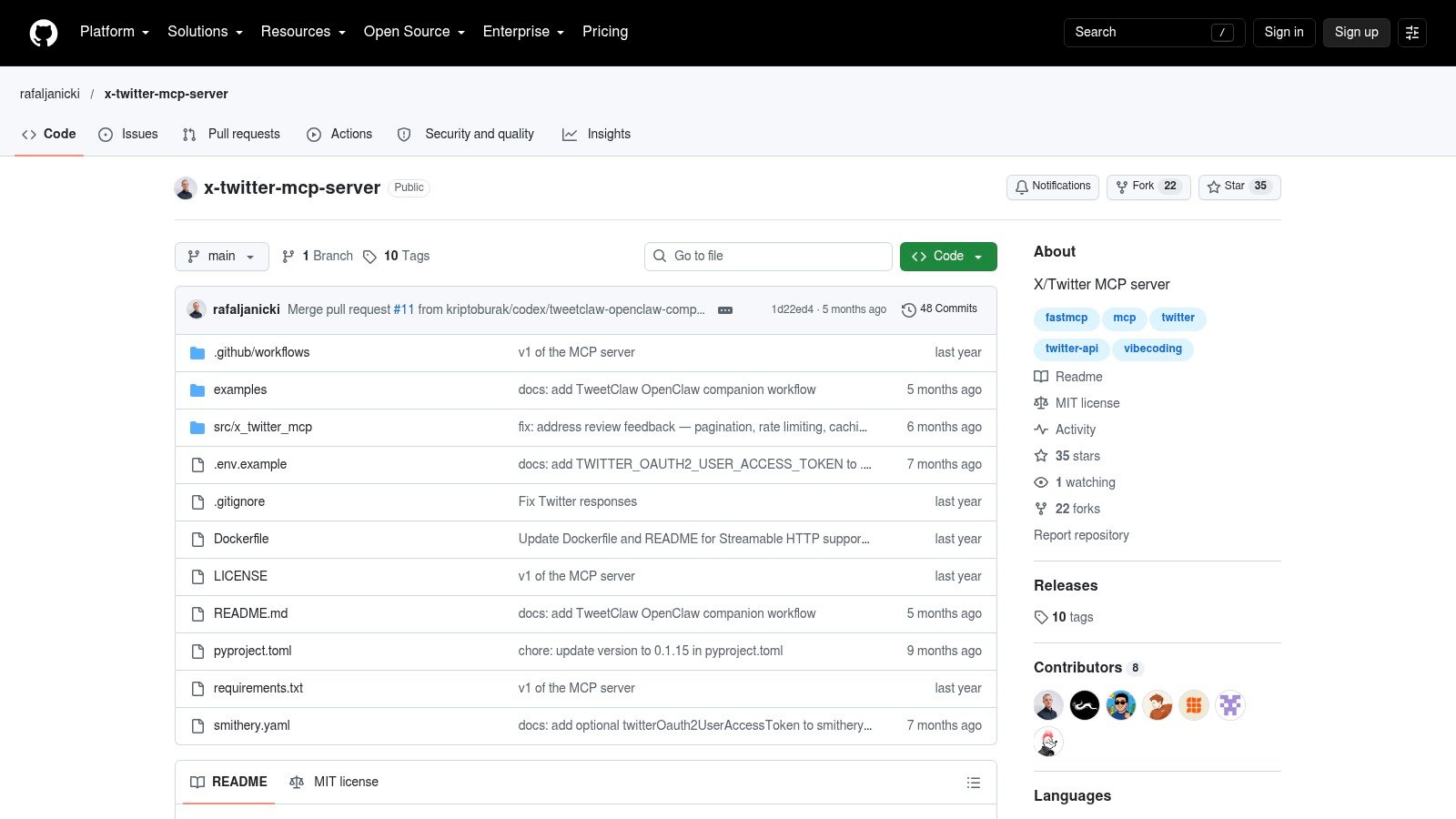
9. X/Twitter MCP
Community X/Twitter MCP servers give agents a direct route to X. This one covers search, timelines, profiles, tweet details, trends, and bookmarks. It can also post, delete, and like tweets. That makes it more action-focused than a read-only listening tool. It helps when the agent must work with a real X account and do more than search and read.
The trade-off starts with keys. This server calls the X API v2, so each call needs X developer keys. That means an API key and secret, access tokens, and a bearer token. Bookmark tools also need an OAuth 2.0 user token. The X API now bills per use from prepaid credits (X API pricing). X’s rules apply even when an MCP server hides the HTTP calls.
Treat write tools as a separate risk class
A live agent shouldn’t get posting or liking tools just because the server offers them. Split read and write access. Require clear approval for public actions. Log the exact payload before it runs. For a read-first workflow, API Direct’s Twitter posts documentation may be a simpler route. It returns X search results in the same format as other networks. You don’t need an X developer app.
Community upkeep is another factor. Each repo supports its own mix of X features, login methods, and client setups. Check how often it gets new commits, and test its error handling. See how the server reports rate limits and empty results before you commit to one.
Use a dedicated X MCP server when X-native actions or account workflows are central. Use API Direct when the agent’s job is wider social research and X is one input among many. Those are different design choices. Neither one is the best connector for all jobs.
10. LinkedIn MCP Server
LinkedIn MCP servers target B2B workflows. This one covers people search, profiles, company pages and posts, job search, and post search. It can read your own feed and inbox too. It can also send messages and connection requests. For hiring, account research, and competitor tracking, a LinkedIn-only tool can go deeper than a general social API.
It doesn’t use LinkedIn’s own API. Instead, it drives your own signed-in browser session. It runs on your machine over stdio by default, with Streamable HTTP as an option. Turn on the narrowest read tools first. Add message or connection tools only after your team has reviewed the access and data handling rules.
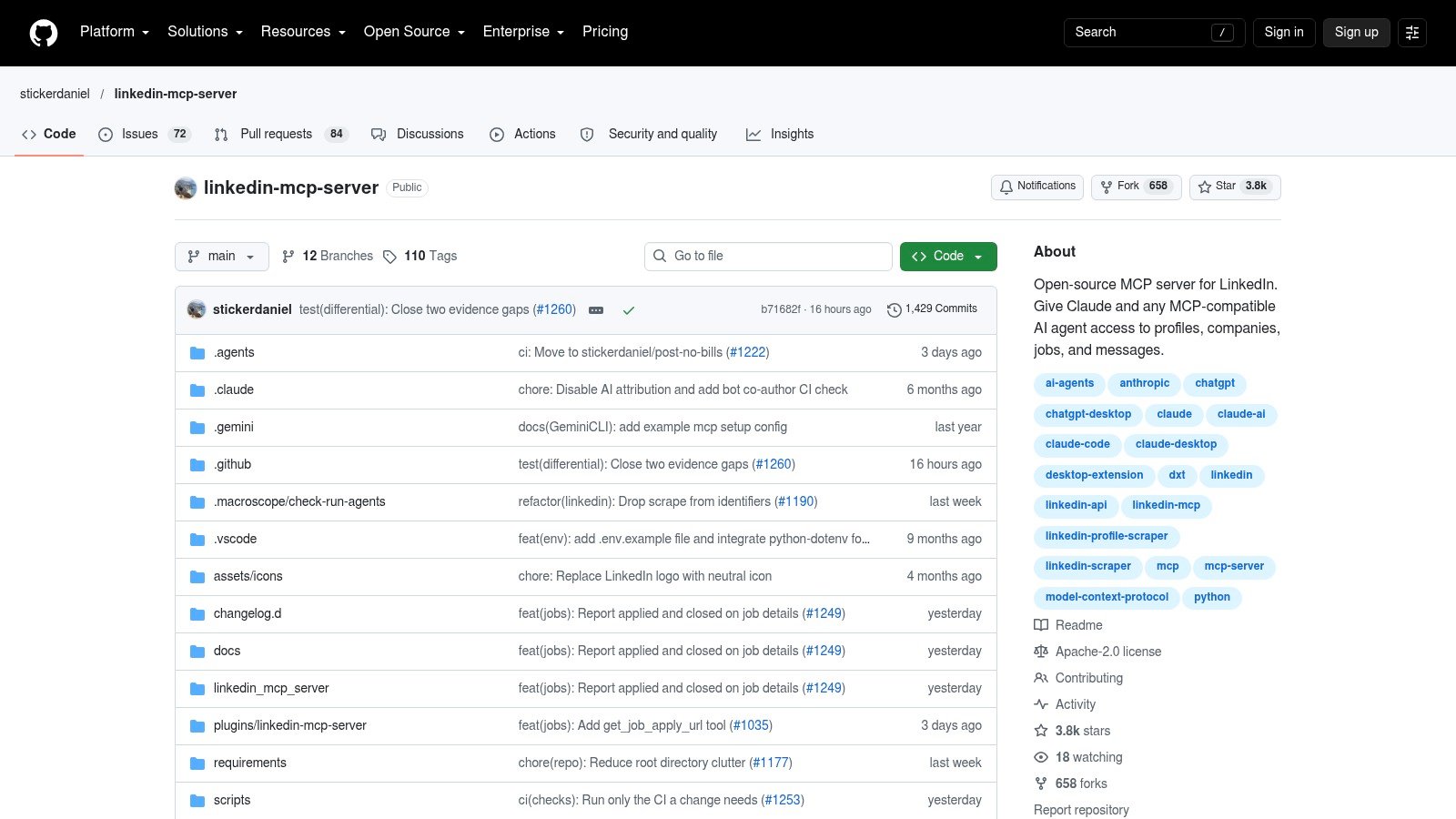
LinkedIn needs extra care around terms, login, and rate control. LinkedIn’s User Agreement bans automated access. The project’s own README warns that accounts can be restricted or banned. LinkedIn’s own APIs are limited and tightly controlled. A server that works for a local test may not be fit for a product that customers use. It may lack the stability, support, or approval model you need.
For cross-platform research, API Direct offers LinkedIn post search and job search. It also returns person details, company details, and company posts. It uses the same API-key model as its other sources. A dedicated LinkedIn MCP server makes more sense when the workflow is LinkedIn-first. That’s true when it needs actions on your own account. Either way, credit your sources. And don’t present guessed job data as a verified identity.
Top 10 Social Data MCP Providers Comparison
| Item | Core capabilities | Unique selling points | Target audience | Price / Cost model |
|---|---|---|---|---|
| API Direct (Recommended) | Real-time search across social, web, forums, news, and Google Places. Each endpoint is an MCP tool. | One schema for all platforms. Emotion scores, batches, and spending limits are built in. | AI agents, social listening, data teams, and agencies. | Pay per request or page, from $0.002 to $0.01. Most endpoints get 50 free calls a month. No card is needed. |
| Meltwater MCP | A remote MCP server for your Meltwater saved searches, mentions, stats, and insights. | Licensed media data with vendor support. | Firms that use Meltwater now. | It needs a Meltwater MCP package. Pricing is through sales. |
| Apify MCP Server | It runs Apify Actors for social, search, maps, and store scraping. | A large store of ready-made Actors, plus job schedules and storage. | Teams that need custom scraping jobs. | You pay for usage. Actor fees and proxy costs can add up. |
| Bright Data Web MCP | Search, scraping, and remote browsers that get past blocks and CAPTCHAs. | It reaches JavaScript-heavy and geo-blocked pages. | Big scraping jobs and sites with bot defenses. | 5,000 free requests a month. You pay for usage after that. |
| SerpAPI MCP | Structured results from Google, Bing, YouTube, and other engines. | Fast search for social URLs and names. | Agents that need a search step. | Monthly search plans. The free plan has 250 searches a month. |
| Tavily MCP | Web search, extract, map, and crawl tools built for LLMs. | Clean web context for checking claims. | Researchers and agents that need web context. | 1,000 free credits a month. Paid plans add more. |
| Reddit MCP Server | An open-source server for Reddit search, posts, comment trees, and user history. | No API keys or login are needed. | Early tests and Reddit-focused research. | Free and open source. Reddit’s own limits still apply. |
| Bluesky MCP | An open-source server for Bluesky profiles, feeds, threads, and trends. | Most tools work without an account. | Researchers tracking Bluesky and the AT Protocol. | Free and open source. Post search needs an app password. |
| X / Twitter MCP | A community server for the X API, with search, timelines, and posting. | It can read and act on a real X account. | Agents that need X actions. | Free to run. It needs X developer keys, and X bills API use. |
| LinkedIn MCP Server | An open-source server for people, company, job, and post search, plus messages. | Deep LinkedIn workflows through your own browser session. | Recruiters, B2B analysts, and sales teams. | Free to run. LinkedIn’s terms ban automated access, so accounts risk limits. |
Build the Smallest Reliable Agent Flow First
The protocol is not the hard part. The hard part is deciding what the agent may fetch and how much. You also need to decide what your app does when a source returns partial data. MCP gives an AI client a tool interface it can discover. But it doesn’t fix cross-platform data shapes, schema drift, licensing, rate limits, or data you can compare. The Social Data MCP introduction is useful for seeing the basic setup model. Platform coverage still varies a lot between providers, as this 2026 social listening comparison shows. So judge each one by how it behaves in real use, not just by whether a connector exists.
A dependable first build should stay narrow on purpose.
- Authenticate once. Use the
X-API-Keyheader for API Direct and keep the key on the server. Don’t put long-lived keys in prompts or client-side code. - Select the smallest endpoint. Use a post search to find posts and a post detail endpoint to check them. Use comment or thread tools only when the answer needs them.
- Configure one HTTP MCP connection. Start with API Direct’s tools before you add niche servers. One link makes client tests and access reviews easier.
- Test pagination and batching. Check if the endpoint bills per request or per page. Keep cursors, stop at a set result limit, and test how you handle duplicates.
- Add enrichment selectively. Use
get_sentiment=trueonly when the answer needs more than the raw content. - Enforce spending caps early. Set daily and monthly limits before you let an agent run open-ended searches.
- Measure the workflow. Track speed, failed calls, per-page billing, concurrency, and empty results. Also check how steady the data shape is across platforms.
MCP is no longer a small dev test. In its engineering post on code execution with MCP, Anthropic said the community had built thousands of MCP servers. Its December 2025 post adds that AWS, Cloudflare, Google Cloud, and Microsoft Azure now support MCP deployments. A Stacklok survey, summed up by Digital Applied, looked at software firms. It found that 41% of them ran MCP servers in limited or broad production. Security was the top barrier. That tells engineers something useful. The pattern is turning into core plumbing, but production controls still decide if it’s safe to run.
API Direct is the practical starting point. It puts social, web, forums, news, and Places data behind one schema. It also offers one API-key model, an HTTP MCP server, usage stats, and spending limits. It won’t replace each niche tool. Meltwater is better when licensed media data and admin controls are central. Apify and Bright Data fit scraping and access problems. SerpApi and Tavily help with search and web checks. Reddit, Bluesky, X, and LinkedIn servers make sense when one platform’s own workflow matters most.
Treat machine accounts, keys, scopes, key rotation, and audit logs with care. Give them the same rigor as any live integration. This matters because an MCP server can make a single key reachable through many plain-language requests. Give the agent fewer tools, narrower access, capped retrieval, and clear approval for writes.
Start with one question your agent must answer well. Connect one data source, check the raw data, and measure the full call path. Only then add enrichment or another platform. That order gives you a useful social data MCP setup. The other way leaves you with a pile of flashy connectors and no rules.
API Direct gives AI agents one pay-as-you-go interface for real-time social, web, forum, news, and Google Places data. You get one data format, MCP access, paging, batches, emotion scores, usage stats, and spending limits. Are you building an agent that needs reliable social context? Skip the separate setup for each network. Visit API Direct and start with the narrowest endpoint your workflow needs.